Pharmacokinetic of Lithium administered as Lithium
Carbonate - single compartment model example with parameter
values of lithium, dosage 1500 mg administered orally every 24h
with bioavailability 1.
Lithium is a monovalent metal cation (Li+)
and is classified pharmacologically as a mood-stabilizing agent. It
is not an organic compound like most drugs but a simple inorganic
ion, typically administered as lithium carbonate
(Li2CO3) orlithium citrate. Its exact
mechanism of action is not fully understood, but it is thought to
modulate intracellular signaling pathways, including second
messengers like inositol phosphate and glycogen synthase kinase-3
(GSK-3), which affect neuronal excitability and mood regulation.
Lithium is absorbed well orally, is not metabolized, and is
excreted unchanged by the kidneys. Pharmacokinetic may follow
1-compartment model(this example) or 2-compartment model.
Common side effects
include tremor,
increased thirst,
polyuria, and
weight gain. Toxicity
can occur easily due to a narrow therapeutic index and may cause
nausea,
vomiting,
confusion,
seizures, or
cardiac arrhythmias.
Renal and thyroid function must be monitored
regularly.
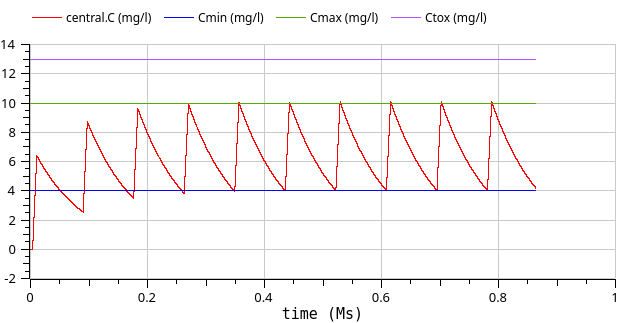
Simulation of 10d, drug administered every day,
therapeutic level are between Cmin adn Cmax, toxic level above
Ctox:
References:
[1] Wen, Jinhua, et al. "A review for lithium:
pharmacokinetics, drug design, and toxicity." CNS &
Neurological Disorders-Drug Targets (Formerly Current Drug
Targets-CNS & Neurological Disorders) 18.10 (2019):
769-778.
Generated at 2026-04-14T18:18:34Z by OpenModelicaOpenModelica 1.26.3 using
GenerateDoc.mos
 .Pharmacolibrary.Examples.PK_1C_LithiumCarbonate