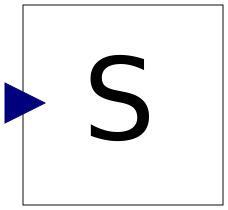
 .PowerGrids.Electrical.System .PowerGrids.Electrical.System
The system object contains system-wide default choices for frequency management and initialization scheme.
If referenceFrequency ==
ReferenceFrequency.nominalFrequency (default option), the
frequency for all phasor frames is fixed to the nominal frequency
of the system. This option is recommended for synchronous systems
that are connected to an infinite bus, because the frequency of all
their ports cannot deviate from the nominal one for a sustained
amount of time, if the system does not lose synchronism. In case of
isolated systems with droop control, the frequency can stray away
from the nominal value for long time intervals, which will cause
all phasors to rotate all the time also when the system gets close
to steady-state conditions. If a variable step-size solver is used,
this will unnecessarily slow down the simulation. In this case, the
next option is recommended.
If referenceFrequency ==
ReferenceFrequency.fixedReferenceGenerator, the
omegaRefIn input should be connected to the frequency
output of the reference synchronous generator. The system object
then makes this frequency available to all other components via the
inner/outer construct. This option guarantees that the phasors will
be constant when the system reaches a steady state, even if the
frequency is different from the nominal value.
The referenceFrequency ==
ReferenceFrequency.adaptiveReferenceGenerators option will
be implemented in the future, allowing to dynamically track the
islanding and reconnection of synchronous sub-systems in the model,
providing the corresponding reference frequency signals to each
sub-system.