
modelExample_1_7_2_DrawingAWire

Part a) Determine temperature distribution in the wire
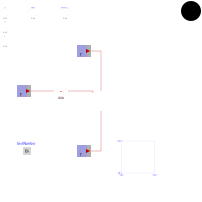
Extends from Icons.Example (Icon for runnable examples).

Information

Moving boundaries seem to be a problem with the current implementation of the conduction model. Can it be addressed in the current conduction method or does the other "classical" approach work better?

Components

TypeNameDefaultDescription
TRANSFORM.HeatAndMassTransfer.BoundaryConditions.Heat.TemperatureT_wWater temperature
TRANSFORM.HeatAndMassTransfer.BoundaryConditions.Heat.TemperatureT_drawDraw temperature
Utilities.CharacteristicNumbers.Models.BiotNumberbiotNumber
Modelica.Blocks.Sources.ConstantDWire diameter
Modelica.Blocks.Sources.ConstantuDraw velocity
Modelica.Blocks.Sources.ConstantLWire length
Modelica.Blocks.Sources.ConstantalphaHeat transfer coefficient
TRANSFORM.HeatAndMassTransfer.BoundaryConditions.Heat.Temperature[nNodes_1.k]T_infinityAmbient temperature
Resistances.Heat.Convection[nNodes_1.k]convection
Modelica.Blocks.Sources.IntegerConstantnNodes_1
DiscritizedModels.Conduction_1Dwire
TRANSFORM.Utilities.Visualizers.Outputs.SpatialPlotTemperaturePositionX - Dimensionless position (-) | T - Temperature (C)
Real[nNodes_1.k]xvalwire.geometry.cs_1/L.y
Real[nNodes_1.k]yvalSItf.Conversions.Functions.Temperature_K.to_degC(wire.materials.T)
TRANSFORM.Utilities.ErrorAnalysis.UnitTestsunitTests